
A Florida roof works hard. Sun, heat, salt air and a long wet summer wear it down a little at a time, and most of that happens where you cannot see it. You can’t control the weather, but you can know where your roof stands and decide what to do about it while you still have choices.
What follows shows you what to check from the ground, what is worth taking care of, and when it’s worth bringing in a professional.
Where is my roof most likely to fail?
At the edges and corners, not in the middle. Knowing where your roof is most likely to fail is the place to start. High wind rarely tears a roof apart from the middle. It catches the edges and corners first, so those are the places to check closely and fix first if anything looks loose or worn.
Wind uplift is highest at the corners, then along the eaves, rakes and ridge. It reaches the field of the roof last, so a good inspection starts at the perimeter.
A roof that has been up for a while can look fine from the street while the parts holding it together are wearing out. The fasteners, the ridge, and the layer underneath the tile tend to go first, and none of them are easy to see from the ground.
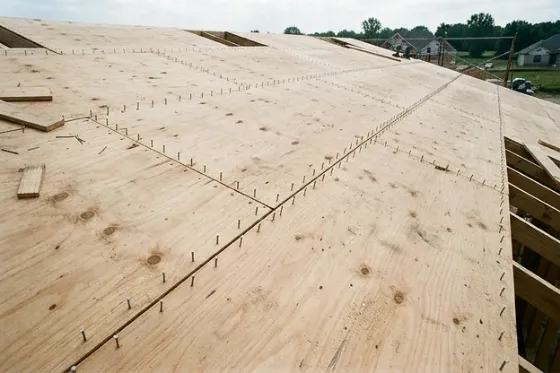
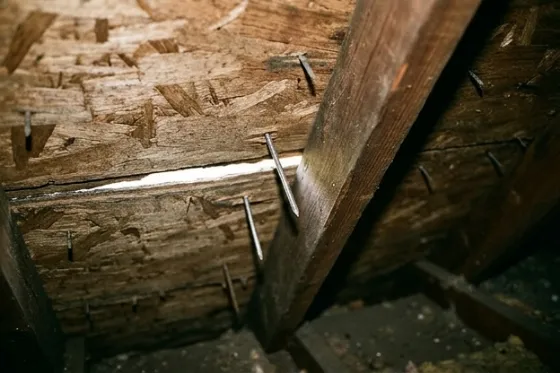
- Fasteners. The type of nail and how closely the nails are spaced largely decide whether the deck stays on in high wind. Ring-shank nails in a tight pattern roughly double a deck's resistance to uplift. On a deck held down with smooth nails or wide spacing, high wind can peel up whole sections of roof at once, and since you can't see the nailing from outside, an inspection is the way to find out what yours has.
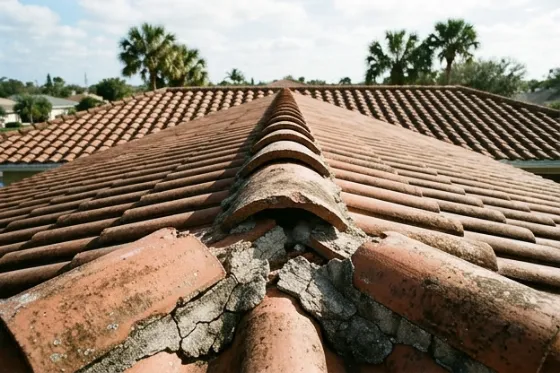
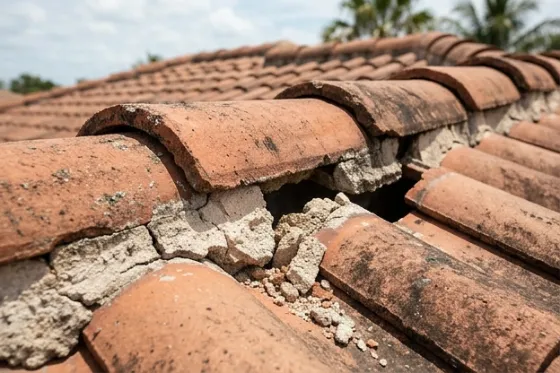
- Ridge, hip and cap. Cap tiles cover the seams along the peaks and top edges of the roof, and they're usually bedded in mortar or sealant that has had fifteen Florida summers to go brittle. Once that bedding lets go, the caps can blow off, break the tiles around them, and leave the seams open to rain. Cracked mortar and loose caps are often visible from the ground, which makes this one of the easier weak spots to catch early.
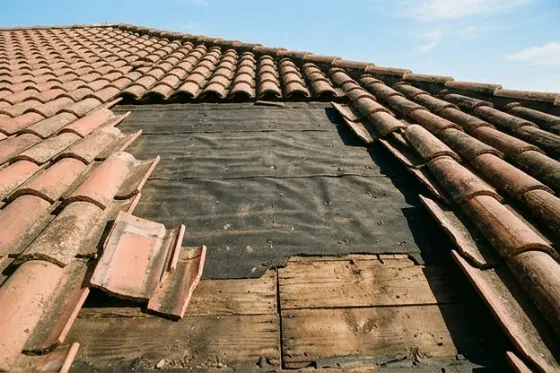
- The underlayment beneath tile that still looks fine. Tile sheds most of the rain, but the membrane underneath is what keeps water out. That membrane typically lasts 15 to 25 years, often well short of the tile above it. When it wears out, water that gets past the tile runs straight into the deck and the house, so on an older tile roof it's worth having the underlayment checked before it is the thing letting water in.
If wind strips away the covering, a sealed roof deck is the last layer between the weather and your home, and it cuts the water getting inside by up to 95%. It's the part of the roof that keeps a damaged roof from becoming a flooded home.
What can I check myself?
More than you would think, and all of it from the ground. The simplest way to find out where your roof stands is to take a good look at it yourself. You don’t need a ladder, and you’re safer without one. Many of the signs that a roof is wearing out are visible from across the street or on a slow walk around your house.
From the ground, look for a straight ridge, covering that runs in line, solid soffit, and clear valleys.
Finding a problem now gives you time to deal with it on your schedule rather than in an emergency. Each of these signs points to a part of the roof that could give way in high wind. If you notice any of them, take a photo so you have a record, and have someone look at it while there's still time to fix it.
- A ridge line that dips or waves. Look along the ridge against the sky. It should be dead straight. A visible sag can often point to something structural. It means sheathing, a rafter, or long-term water.
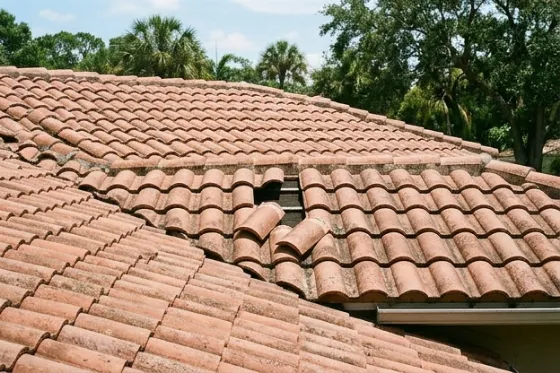
- Covering out of line with its course. Look to see if any of the roof covering is slipped, lifted, cracked, or missing. On tile, one displaced piece leaves the underlayment in direct sun and rain.
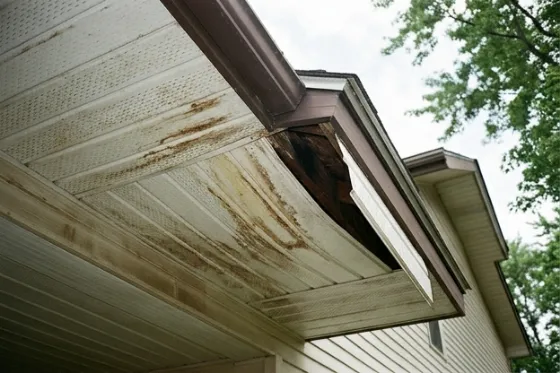
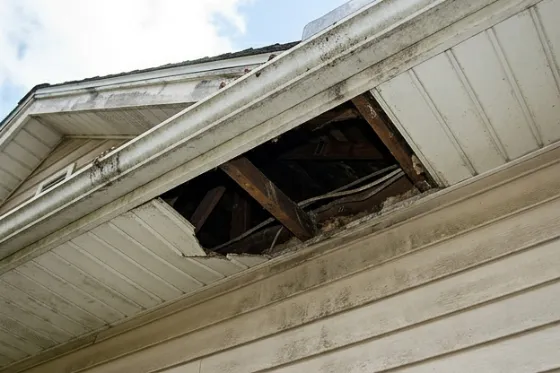
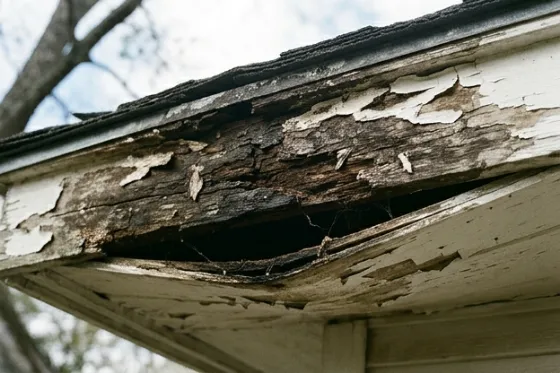
- Soffit that's stained, sagging or open. Staining means water has been getting in for a while. An open panel is a direct path for wind-driven rain into the roof structure.
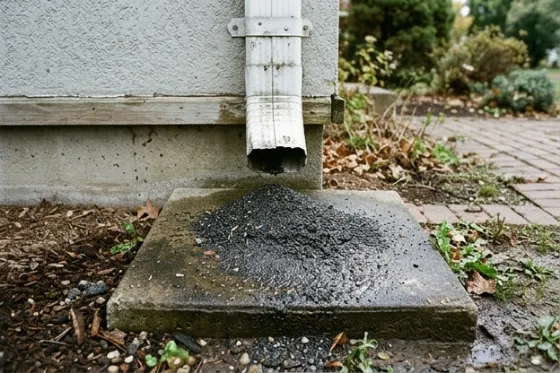
- Granules collecting at the downspout. On a shingle roof, heavy grit in the gutter or the splash block can often mean the surface is wearing through.
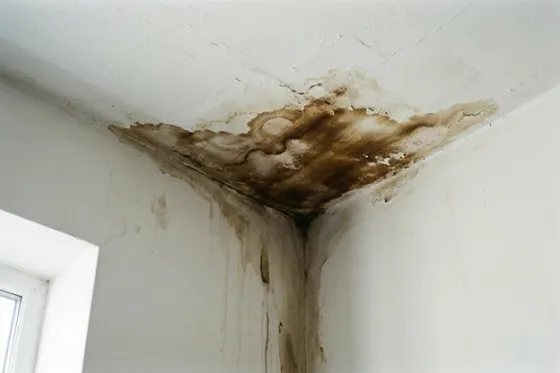
- Staining on ceilings and walls inside. Check the corners of upstairs rooms and the garage ceiling after heavy rain. Interior staining is usually a roof problem that has been running for months.
What should I take care of now?
Five things, and most of them are free. How well a roof holds up depends a lot on small things taken care of early. Many of these can be completed without a contractor, and each one takes care of a common weak spot while you still have time to do it properly.
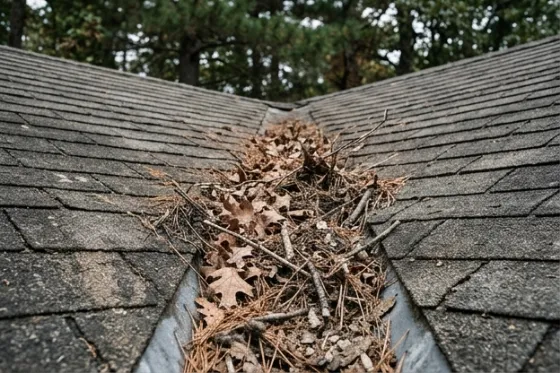
- Clear the valleys and the gutters. This is the highest-value hour you can spend on a roof. Debris packs in where two planes meet, water backs up behind it, and then it travels sideways under the covering instead of off the edge.
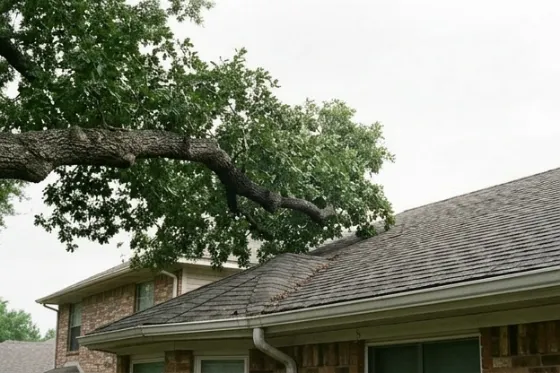
- Cut back whatever overhangs the roof. Limbs abrade the surface in ordinary weather and strip granules or chip tile. In high wind, those same limbs can snap off and tear through the covering.
- Look up at the soffit, all the way around. After Hurricane Charley, roughly 75% of the homes assessed had lost soffit material. Soffit is how wind-driven rain gets into a roof that's otherwise intact. Anything loose, open or stained is worth attention now.
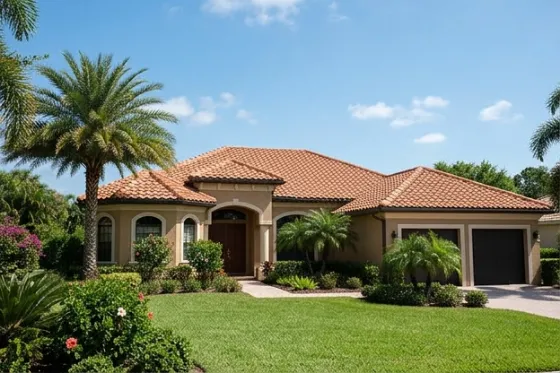
- Photograph the roof while it's sound. Stand at each corner of the property and take dated photographs of every elevation. Ten minutes, and it gives you a record of what good condition looked like.
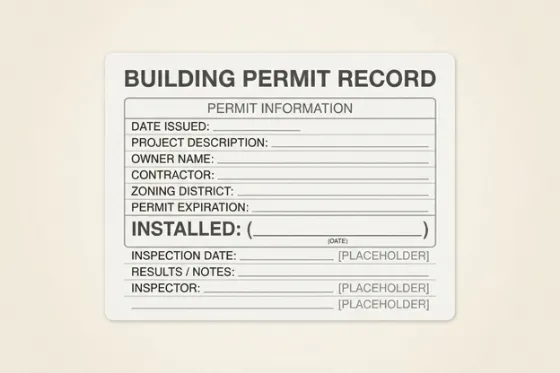
- Find the permit and the installation date. Your county's permit portal will usually have it. Roof age settles more questions than most homeowners expect: maintenance, replacement planning, and your policy.
Once heavy weather is headed your way, it's too late for roof repairs, but there's still a lot you can do to protect your home. Secure the yard: bring in or tie down anything that can become a projectile, including furniture, planters, grills and downspout extensions. Secure openings. And stay off the roof, before the storm and after it.
Post-storm roofs are wet and structurally uncertain, and a homeowner on a ladder is one of the most common ways people get hurt in the days after a big storm.
What can a professional see that I can’t?
The parts that decide whether the roof holds, which are underneath it. Checking from the ground tells you a lot, but some of the most important parts of a roof can only be seen up close. A licensed contractor can safely get to those areas and check how well the roof is holding together.
Knowing what gets checked helps you understand what you're getting, so you can decide what to fix with the full picture. These are the eight things being looked at.
- Fastener and deck attachment. The type of nail and the spacing holding the deck to the framing. Weak attachment lets high wind lift whole sections of the roof at once.
- Ridge, hip and cap condition. Whether the mortar or sealant under the cap tiles has cracked or come loose. Loose caps can blow off and leave the seams along the top of the roof open to rain.
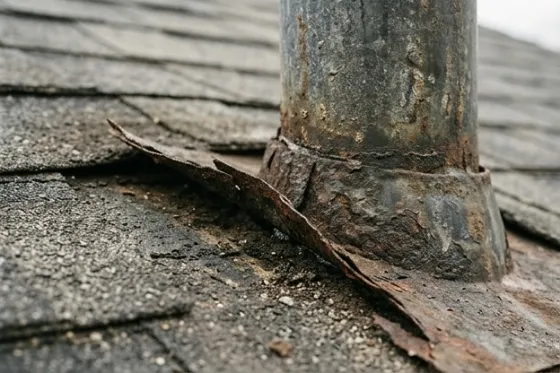
- Flashing at roof penetrations. The metal and seals around vents, stacks, skylights, chimneys and valleys. When flashing lifts or corrodes, wind-driven rain gets in around the opening.
- Soffit and fascia integrity. The panels and boards along the underside of the roof's edge. Once they're loose or open, wind can push rain into the attic and get a grip on the roof edge.
- Underlayment condition. The water barrier beneath the tile or shingles, which often wears out well before the covering above it. If it's failing, any water that gets past the surface reaches the deck.
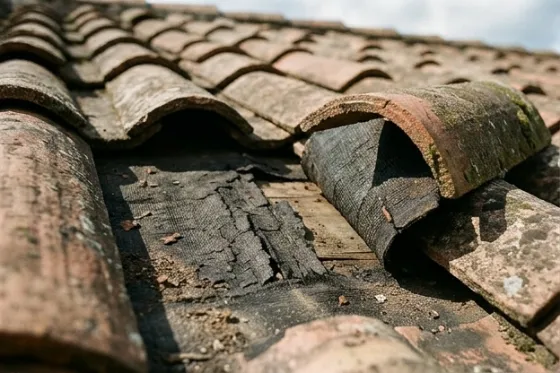
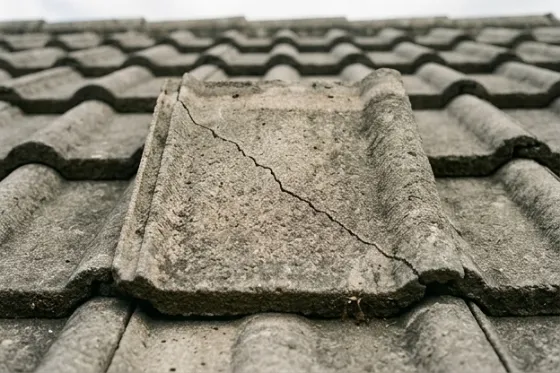
- Cracked, slipped or missing covering. Including hairline cracks in tile that can't be seen from the ground. Each damaged piece lets water in and gives wind a place to start lifting the pieces around it.
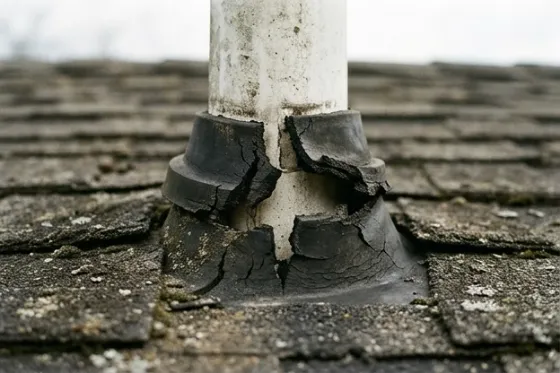
- Sealant and boot condition. The rubber boots and sealant around pipes and vents. Sun breaks them down over time, and a cracked boot lets water run down the pipe into the attic.
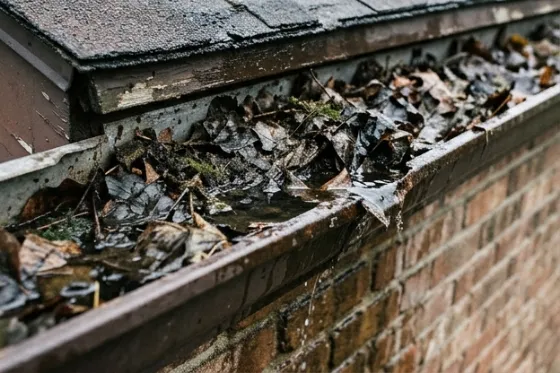
- Drainage and debris. Gutters, scuppers and valleys. When they're clogged, heavy rain backs up under the roof edge.
Booking one takes a phone call. You call and we confirm a time, usually within a few days. A licensed contractor walks the roof and looks at any risk areas you identify, and at any visible signs of roof wear and damage that may leave you at risk. You get our honest answer: we'll tell you what we found, and a plain answer on how much service life is left. If nothing needs doing, we tell you that. There's no version of this where you get talked into work you don't need.
The best time to have an aging roof looked at is while nothing is wrong with it, so any weak spots can be dealt with while you still have choices.
If you need formal documentation of your roof's condition, Corvex Roofing also offers a separate inspection that includes an official report. Documented inspections have a fee. Call the office to learn more.
How long will my roof last?
It depends on the material, and condition matters as much as age. Knowing how old your roof is helps you decide whether to keep maintaining it or start planning a replacement. That number means different things depending on the material, because some roofs are built to last decades longer than others.
| Covering | Typical service life | Common signs of wear |
|---|---|---|
| Asphalt shingle | 15 to 20 years | UV and heat. Granule loss first, then curling at the edges. |
| Concrete or clay tile | Tile 30 to 50+ years Underlayment 15 to 25 | The underlayment, almost always, and long before the tile itself. |
| Metal, standing seam | 40 to 60 years | Seam and fastener condition; coating wear at the coast. |
| Metal, exposed fastener | 25 to 40 years | The neoprene washers on the screws, which go brittle first. |
| Flat or low slope | 10 to 20 years | Seams, terminations, and water that stands instead of draining. |
Ranges are typical for coastal east-central Florida and assume normal maintenance. Salt air, direct exposure and attic ventilation all move these numbers, sometimes considerably. The only way to know where a particular roof sits in its range is to look at it.
Roof age and your insurance
Insurers often take a roof's age into account, but Florida law limits how much they can rely on age alone, and the details depend on your policy. What you can control is knowing your roof's actual condition along with its age. For questions about your own policy, talk to your insurer or agent.